
Reclaiming the Course of Your Year
See the rhythm and the control the ride: The school year doesn't have to feel like a rollercoaster.

There are a lot of comparisons between a rollercoaster and the year in the life of a school. It can quickly feel like you are completely at the mercy of the ride. Strapped in from start to finish. No brake. No way to take the wheel or step off. Pay attention to this feeling. It is one of the red-flag signals you should be alert to in your leadership.
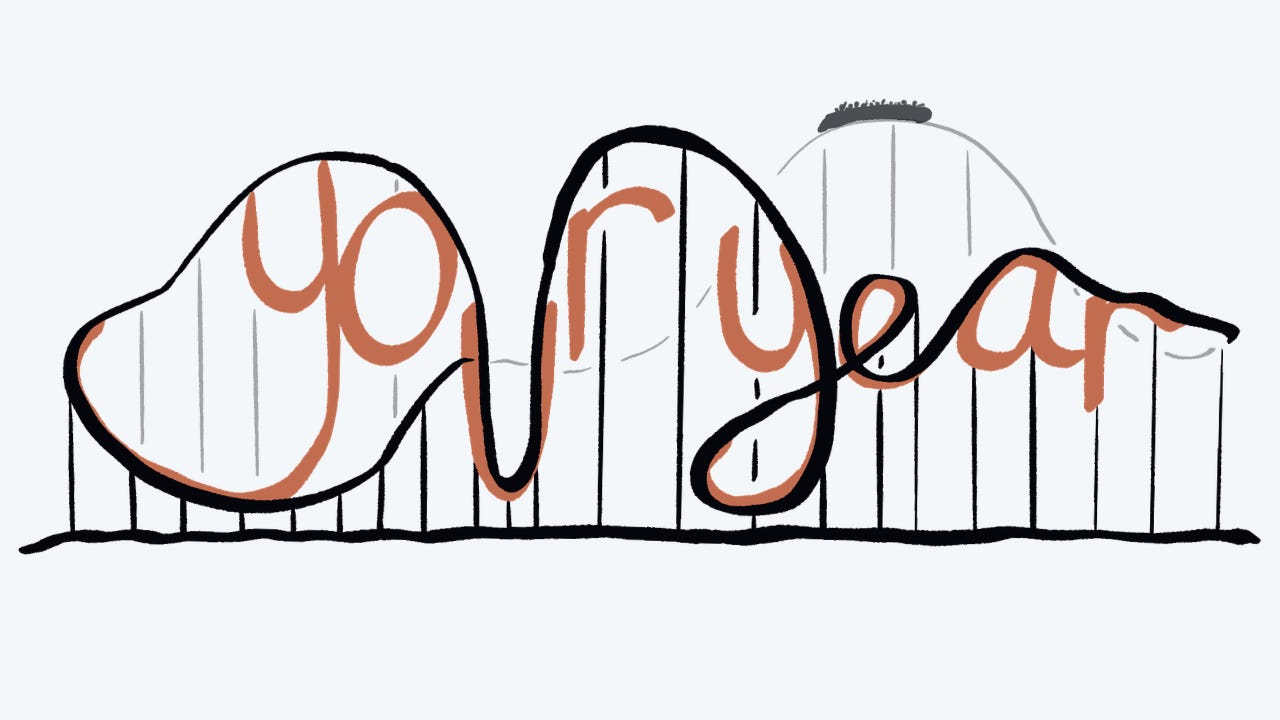
Right now is the perfect time to reclaim control and feel more intentional in how you take on the second half of the year. To assist you in getting there, I have a practical routine that will help you shift from feeling trapped on the ride to steering your own course.
The ‘roller coaster red-flag’
I know the feelings. The mix of energy, excitement and uncertainty at the beginning of the year. Moments of concentrated stress and pressure. Short periods of relief. Exhilaration at the highs and some lows that can give that sudden stomach drop feeling. All of the fun twists and unexpected turns. I have struggled through. Held on with white knuckles. Prayed for the ride to end at the next bend. Felt the relief at the end of the year, before it all starts again. I used to think this was how it would always be.
This feeling immediately triggers alarm bells for me now. It is this feeling that alerts me to moments when I need to step back, reflect and refresh my view of things. Pay attention to how I feel and avoid getting stuck in reactivity mode.
One of the key drivers for writing this is to remind you, that no matter what your situation is you have agency and control. You can reclaim the course of your leadership.
You are not a passenger. You are an active agent in the life of your school, system and your community.
While there are things out of your control, don’t forget the impact you have. Every day you make decisions that affect your work and the experiences of others. I am not writing this to overwhelm you, but to remind you of the importance of leading with reflective, considered and strategic intent.
It is not easy, especially when you are under stress, with deadlines looming. However, you can plan for and take charge of the way the yearly cycles impact on you and mitigate any slides into reactivity.
Routine practices set you up for a confident run
Incorporating effective thinking and planning tools along with routine practices into your leadership rhythm enable you to act with strategic intent. These are not one off actions. They should help you develop recurring beats to your days, weeks, year that you sharpen over time.
While you can’t plan for every event that impacts your work, there are patterns you can anticipate. Consequently, you feel more in control of the actions you take and the decisions you make. Today we are focusing on reclaiming the flow of the year. Building your awareness so you can plan when to take action, where you can reset and when to anticipate the challenges.
Monthly Reset Routine - Live Streamed
Join us on the last Friday of each month (1:30pm AEST), where I host a Monthly Reset process to help you reflect, reset your focus and set your course for the month ahead. Mark it in your diary and maintain the momentum! For these opportunities and more, consider supporting this independent publication.
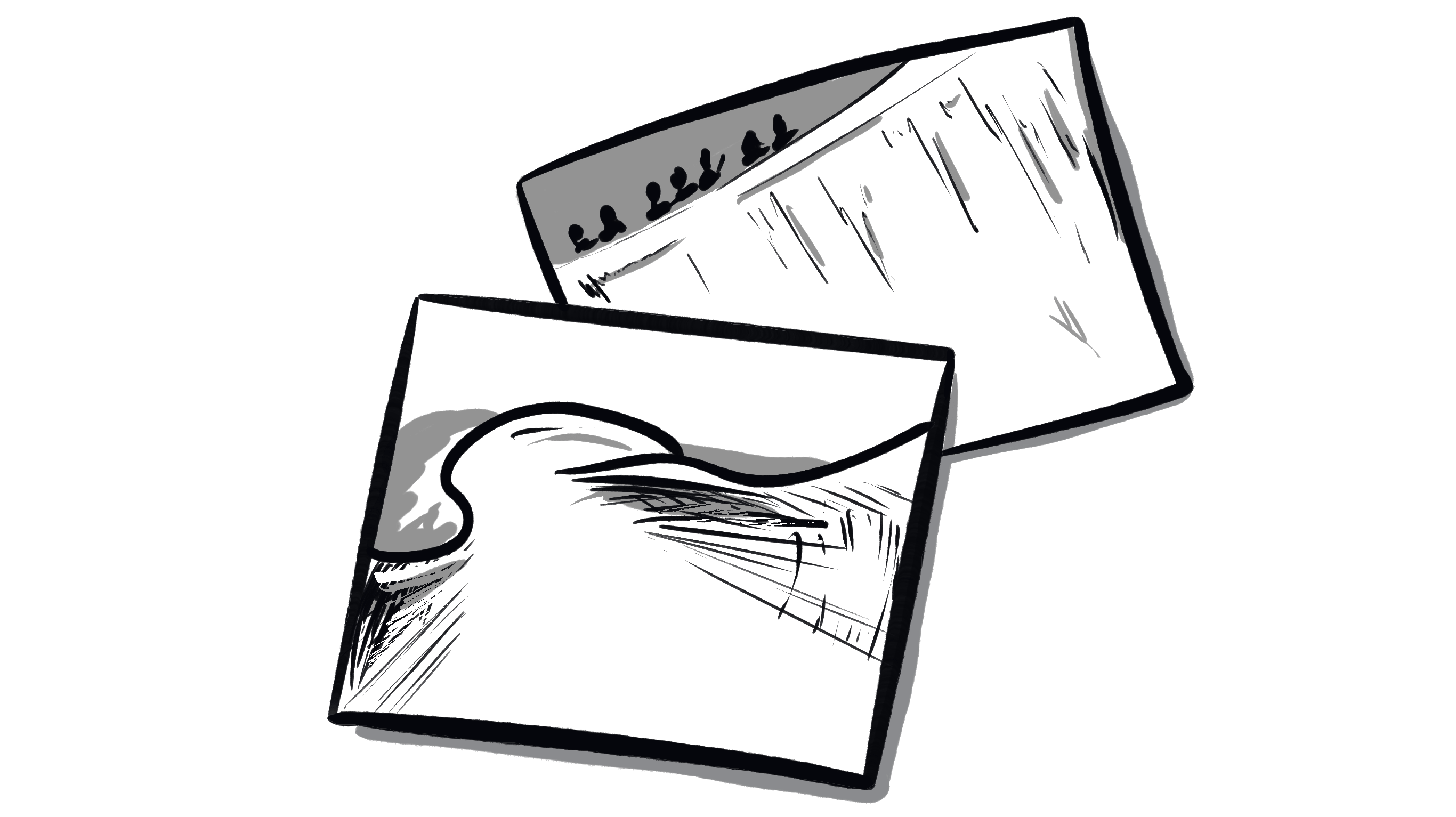
If you have been feeling more roller-coaster lately, have no fear. I am hopeful we can have you feeling more “bobsled”. Yes! You heard me. Remember the 1993 film Cool Runnings? The one about the Jamaican track athletes who compete as a bobsled team at the Calgary Winter Olympics. I am reminded of team driver Derice memorising turns, flipping through photographs, in preparation for their Olympic run. You will see Formula 1 drivers doing the same thing. There are so many factors they don’t have control of, but they routinely prepare, practice and plan how best to execute their skills to achieve their goal.
Know thy course
Understanding the way your year looks and feels doesn’t just help you plan what you are doing, but also how you will get there. It allows you to anticipate what additional factors may help or hinder you.
This is the first step in taking control of your year. Many of the processes I rely on come from the journalling techniques developed by Ryder Carroll in his book “The Bullet Journal Method“. I am by no means an expert journaller! However, regularly using enough to get by, reflecting on and adapting my day to day operations, help keep me feeling more agile, intentional and accountable.
Wait!...I have seen those fancy journals on instagram...Do I have to use coloured markers, tape and learn calligraphy?
Not at all! Some people do. And if you know how, have the time, energy and enjoy doing these things, I am not going to crash your party. The processes I share here don’t rely on this. You only need something to write on and something to write with. That is it! This isn’t a craft activity or an artwork. You are using pen and paper to help you facilitate reflective, strategic thinking and planning.
Carroll uses future log pages as a way of preempting events or deadlines and tracking things he commits to doing across a year.
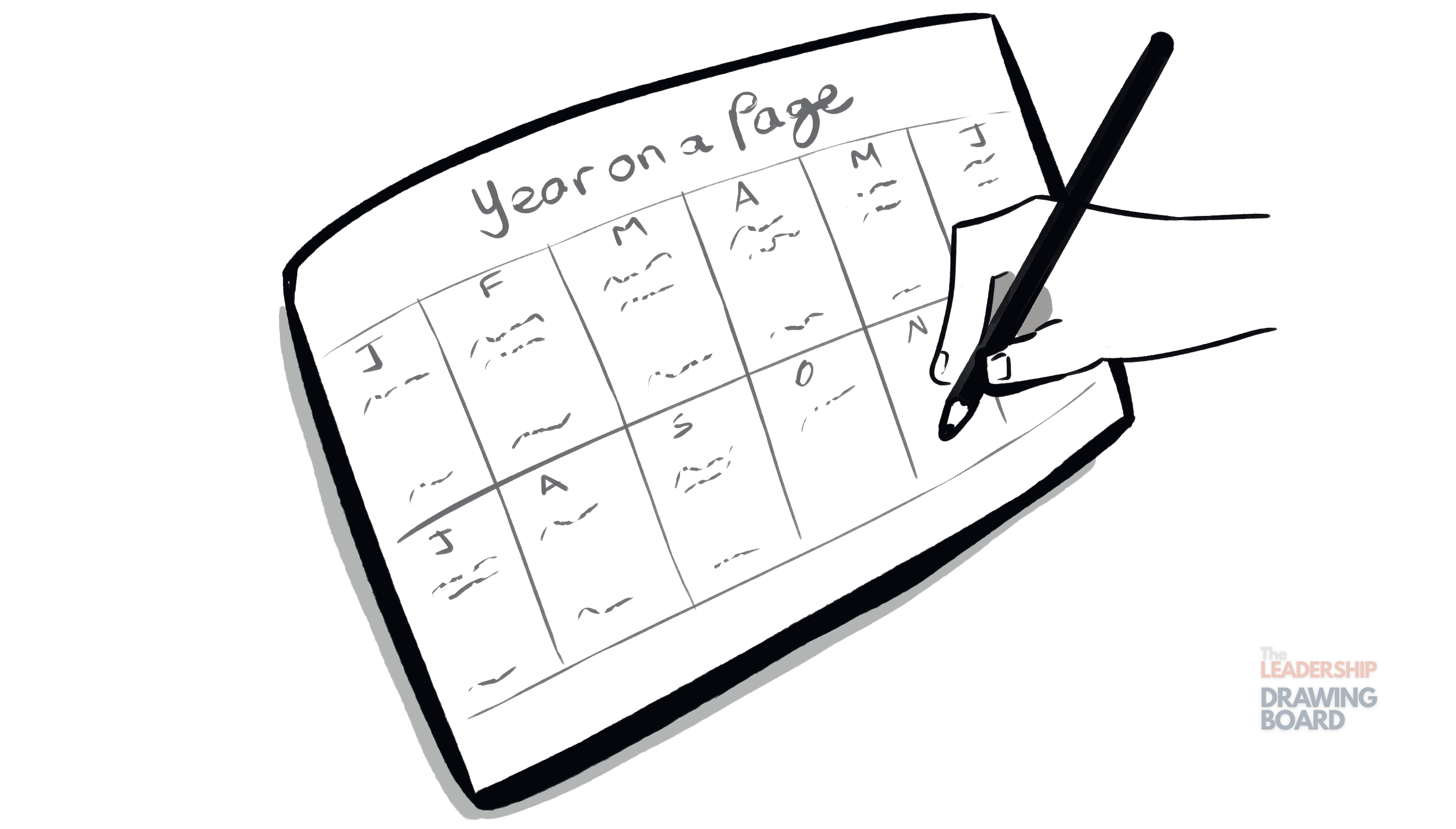
Today’s routine is adapted from this approach, with a school leadership twist. Think of it as your Year on a Page. It is a routine you ideally return to at least once a year, especially at the beginning. Refer to it often and update it as regularly as you need to so it is an accurate tool.
The “Year on a Page” Leadership Routine
Level 1
Routine Rhythm
Set up/review at least once per year. Update as required. Refer to it often! Anytime you are planning or completing a reset.
What you need
Minimum of 30 Mins - don’t rush it.
An A4 page or a spread in your journal, diary or notebook. Alternatively, you can use the template provided.
A pen and a pencil.
Method
1. Set Up Your Page - Space for Each Month
You can use a single A4 page to do this. I am increasingly a fan of books with dotted-grid pages. Why? Dot grids add greater flexibility than lined pages and more structure than blank ones. They allow me to divide up the page when I need and also keep my writing from going all over the place!
Ok let’s set up our page. Or you can download the template at the end of this article to help you get started!
First, orient your page to a landscape view.
Divide your page to evenly fit each month. In my example, I have divided the page in half with a horizontal line. I have allocated January to June to six boxes above this line. I have then added July to December to the six boxes below this centre line.
2. Mark Out Key/Recurring Events
Add any significant events and deadlines that impact on you, your work and your team to their respective months. Include dates if you know them.
3. Include Reminders for Yourself
We are going to add two more pieces of information for each month. These don’t have to be long. Think of them as reminder notifications that inform your planning. For each month add your responses to the following prompts:
What do I need to lead effectively?
What do others need from me?
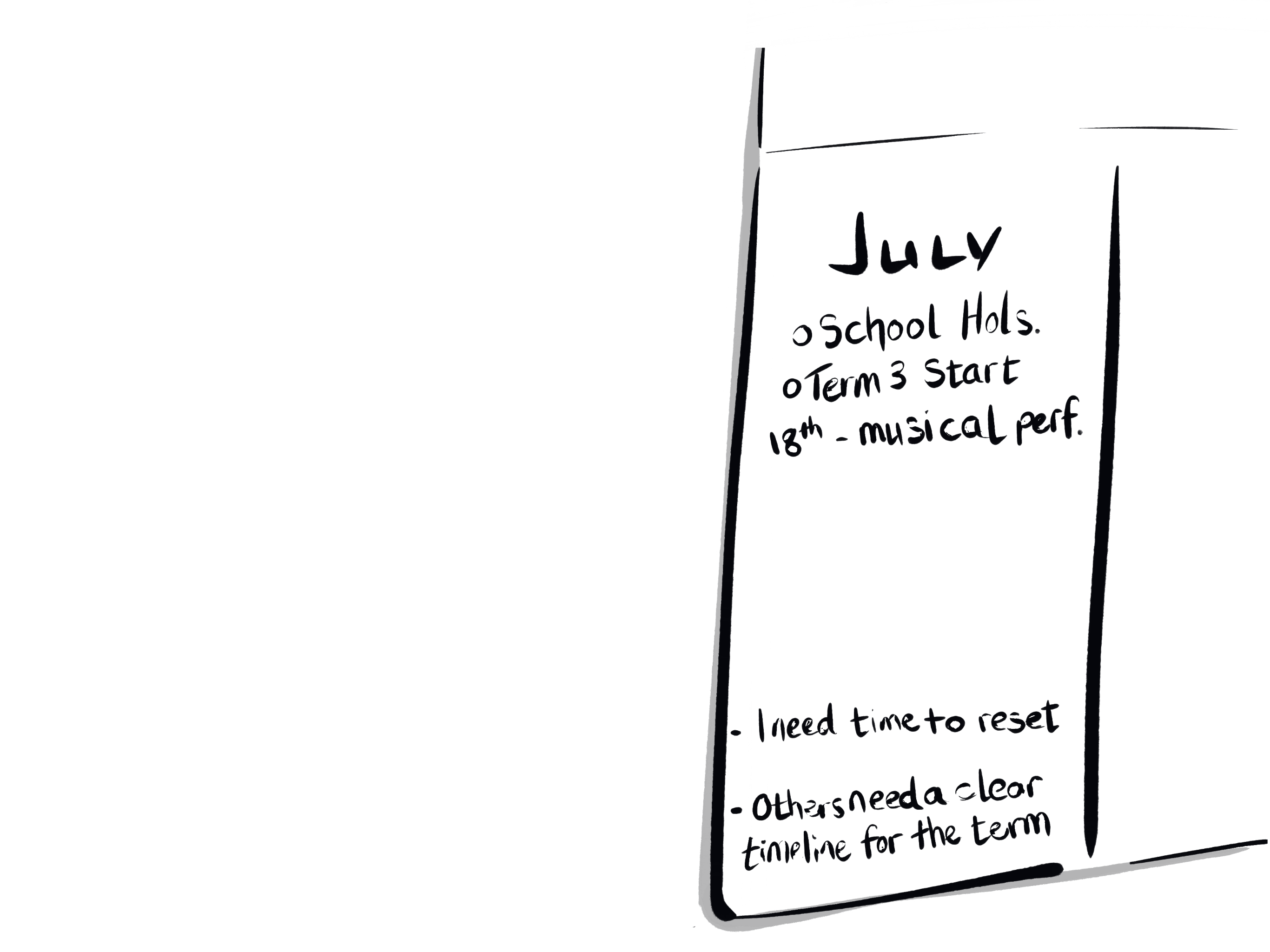
Ok that is the structure for your Year on a Page built. As it is, you have a useful outline of your year to support you in plan. Keep it visible, wherever you do your strategic thinking.
Ready to level this up even further?
Level 2
Let’s Visualise the Course!
This step is optional and it is ok to stay with your page as it is at Level 1.
Although if you are feeling bold, we are going to add a visual representation of one critical factor that impacts you most in your year. Think of it like charting the flow of particular cycles so we can anticipate how they may affect you. You don’t need numerical accuracy here, just a visual reminder.
Why only one factor?
I recommend choosing one factor to keep the visual clear and lean, rather than adding too much clutter to your page. If you want to experiment with different options, why not photocopy your page and explore. Find and refine the factor and visual that supports you the best! This is Level 3 work. Iterating your own visual = true leadership-Jedi material.
What factor do I choose to visualise?
This is your call. Avoid the temptation to overwork your document with too much information.
Choose the option that provides the most helpful data for you. The choice really depends on the nature of your role, what your current priorities are and the potential challenges. Some possibilities include (but are not limited to):
Energy levels: where are they at their highest, lowest and how do they change/compare?
Stress points: where are the stress points concentrated?
Sprint cycles: where do your team’s sprint cycles start, peak and reset before the next round?
How does the visualisation work?
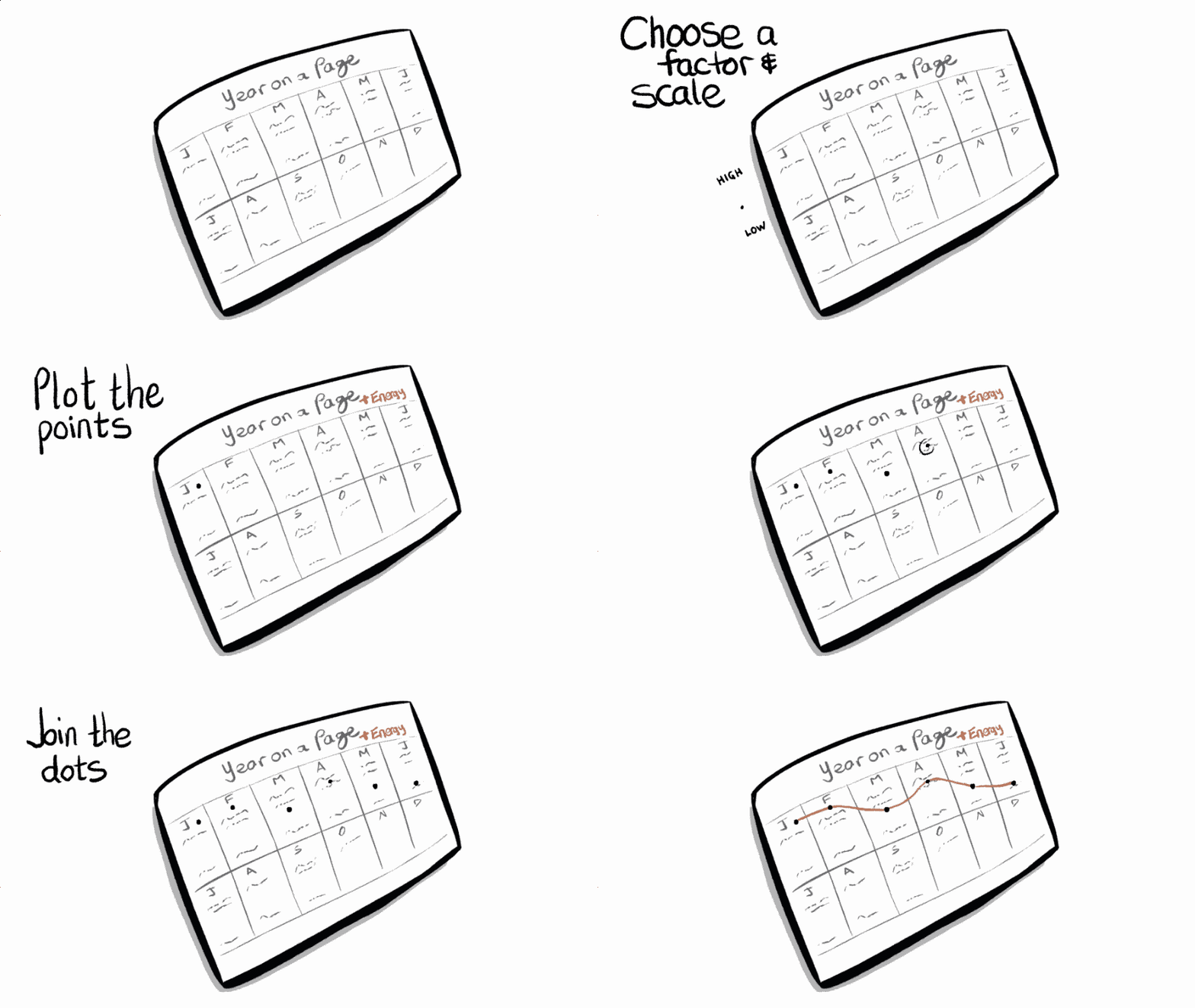
To create your visual think of the horizontal axis as a representation of time. The vertical axis for each month is an “intensity” scale.
Month by month, we are going to plot out a visual course.
Let’s take the examples above and think about how to scale and chart them. The table below provides a starting guide.
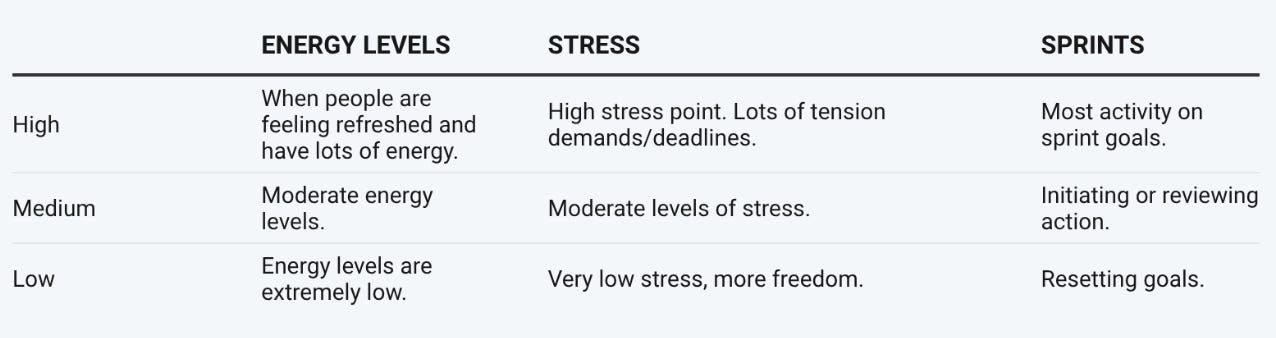
Use a pencil to mark the ‘high’, ‘low’ and the points in between first. Pencil helps us fix anything along the way. Plot points month by month using a version of the scale above or your own. Avoid getting too particular on measuring your points. You don’t need a ruler! Just capture what you know and expect.
Then use a smooth line to connect them. The result? A river? A Formula 1 track? Your very own “bobsled” course? If these metaphors help, great! What they are not...is a rollerc...Ok I am going to treat that word like Voldemort. It shall not be named any more. You are not a passenger. You are in control!
How to use this
It helps to step back from your page and identify where you are in the year. Keep this page visible. You want it there when you take time to strategically reflect and reset. Anytime you use this page in your planning, ask yourself:
What are the factors that are going to impact most on you and the team you lead in the weeks ahead?
The Year on a Page tool helps draw your attention to the factors to anticipate as you move through the year. Regularly incorporating this routine in your yearly flow, you are less likely to forget deadlines and more likely to feel better prepared to lead with confidence and clarity. By visualising your year, you understand the cycles that impact on you, your work and your team.
Change and update it as often as you need. It is valuable to check-in at least once every year and ensure that it accurately reflects what you expect from the year ahead.
What does this work reveal? What insights help inform your leadership/strategic planning?
